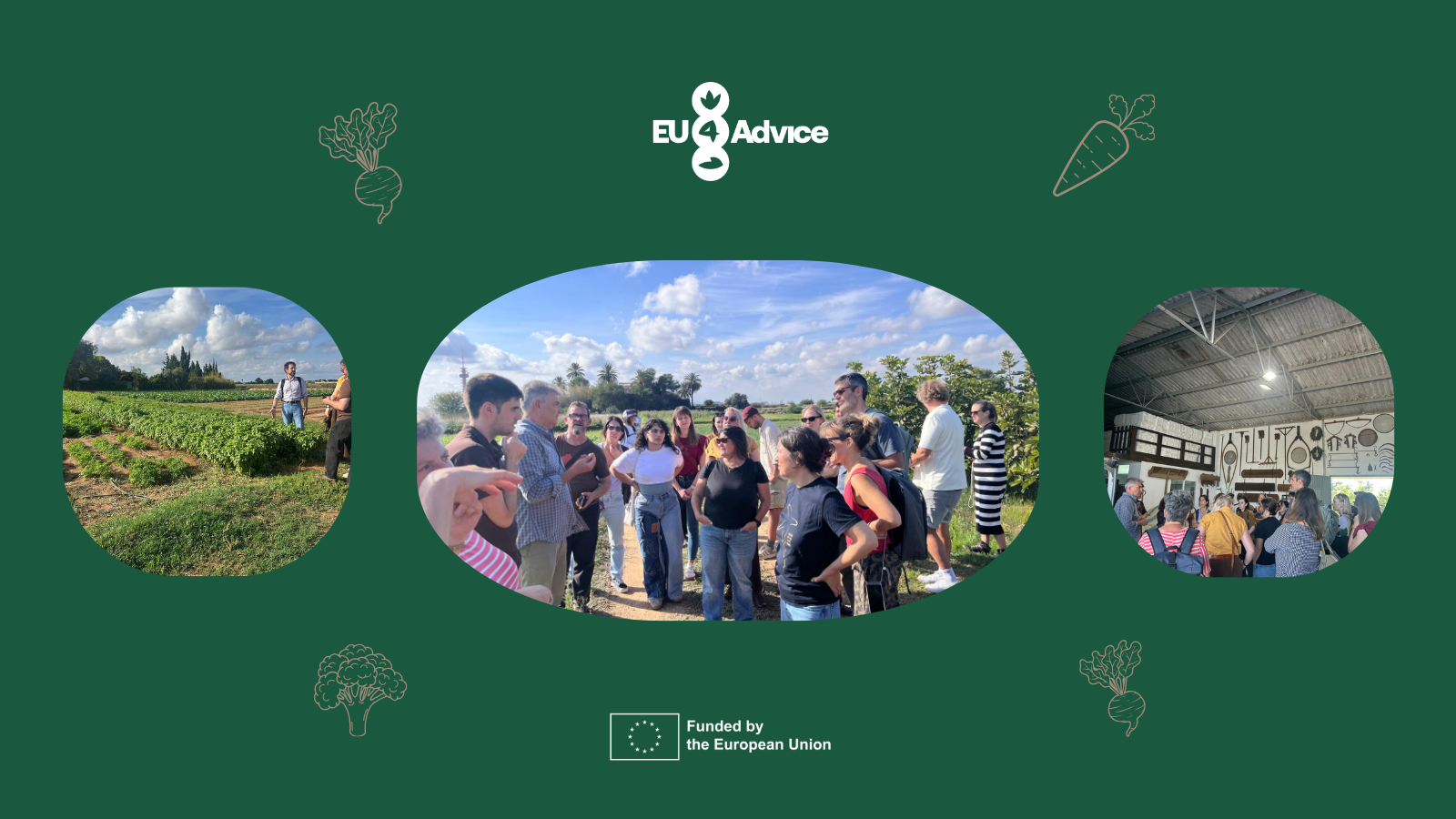
The Future of the Huerta Lives in Its Farmers and Producers
-An interview with Julio Quilis-
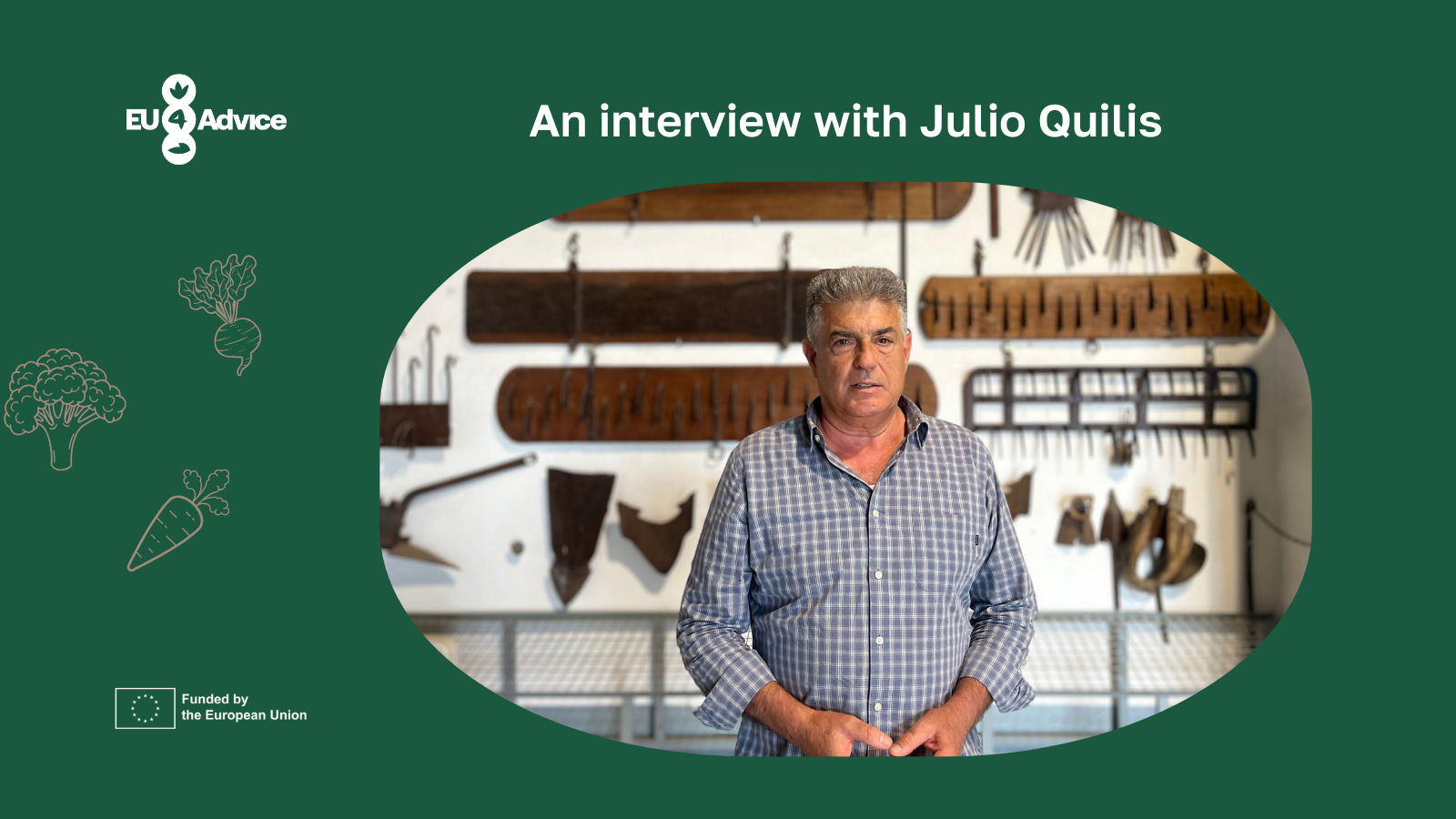
Understanding the evolution of local food systems requires listening closely to those who have lived through their transformations. Julio Quilis, co-founder of Sá i Fresc and long-time farmer and adviser in the Huerta of Valencia, offers a perspective shaped not only by practice, but by decades of observing how agricultural knowledge, markets, and territorial structures intertwine. His story begins fifteen years ago, when he and two fellow farmers decided to create an organic production initiative rooted in a simple yet profound principle: that the food grown in their fields should nourish the people living around them. Their intention was not merely to supply vegetables but to revive an agroecological idea, bringing seasonal, organic products directly to local residents in a metropolitan area of more than 1.5 million people. The challenge was evident from the start: local farmers, increasingly isolated and not part of an organised structure, lacked the logistical capacity to compete with supermarket chains whose highly developed systems set the pace of modern consumption. As a result, traditional producers in the Huerta have been steadily disappearing, displaced by a mismatch between market demands and the realities of small-scale farming.
From this tension emerged Sá i Fresc, conceived as a way to produce and sell high-quality, organic, freshly harvested food that remains affordable for both farmers and consumers. Julio insists that this direct relationship between producer and citizen is not nostalgia; it is an attempt to restore the historical role of the Huerta as Valencia’s pantry. But renewing this role requires understanding how deeply the landscape and the profession have changed.
Having worked for years as an agricultural adviser in cooperatives, he recognises that today’s farmers face a very different environment from that of the 1980s or 1990s. Modern society requires documentation, traceability, labour compliance, environmental stewardship, and commercial alignment, responsibilities that often overwhelm small farmers operating alone. This is why, he says, the call for “professionalisation” is not criticism but an acknowledgement of the complexity farmers are now expected to navigate.
The challenges come from many directions. Farmers are held responsible for the correct use of seeds, fertilisers, and pesticides, and the environmental consequences of misuse can be severe. Regulations, from cultivation logbooks to food safety standards, serve an essential purpose, but many farmers struggle to keep up with them unaided. Labour obligations pose additional challenges. Whereas small farms once relied on family labour, many producers today must hire external workers and manage contracts, inspections, and compliance with collective agreements, all of which require knowledge they often lack. Social expectations add another layer, as consumers demand safe, environmentally responsible food while remaining accustomed to the convenience and pricing structures of large retailers. Across all these dimensions (productive, environmental, labour-related, social, and commercial), farmers need guidance. Not occasionally, but continually. While individual advisory support is valuable, Julio believes that associative structures, such as cooperatives, are essential for providing the comprehensive, multidisciplinary support that farmers need to remain viable.
This need becomes even more urgent when considering the consequences of the disappearance of farmers. In territories like the Huerta of Valencia, agriculture does more than produce food: it sustains cultural identity, safeguards historical landscapes, and supports the social fabric of entire communities. Without farmers, the Huerta would not simply decline. it would vanish. Abandonment would make way for urban development and industrial expansion, erasing millennial landscapes that have shaped the region’s life and identity. Such a loss would reach far beyond agriculture. Gastronomy, tourism, and cultural heritage would all suffer, deprived of the living landscapes that give them meaning and appeal. Economic potential would shrink, and depopulation, already evident in many rural areas, would accelerate as people move to cities in search of opportunities no longer available at home.
Julio’s reflections reveal a fundamental truth: sustaining rural territories requires sustaining the people who care for them. Farmers will survive only if their work is economically viable, socially valued, and supported by the advisory systems that enable them to adapt to evolving demands. Projects like EU4Advice matter precisely because they address this need. They help farmers acquire the knowledge, structure, and confidence required to participate fully in today’s markets while preserving the landscapes, traditions, and local food systems that depend on them. In doing so, they contribute not only to agricultural resilience but to the continuity of cultural memory and territorial life. And as Julio’s experience shows, this is not merely an agricultural question; it is a societal responsibility.
You are currently viewing a placeholder content from Default. To access the actual content, click the button below. Please note that doing so will share data with third-party providers.