Turning agricultural waste into opportunity: Spektrum at the thERBN Training & Demonstration Days
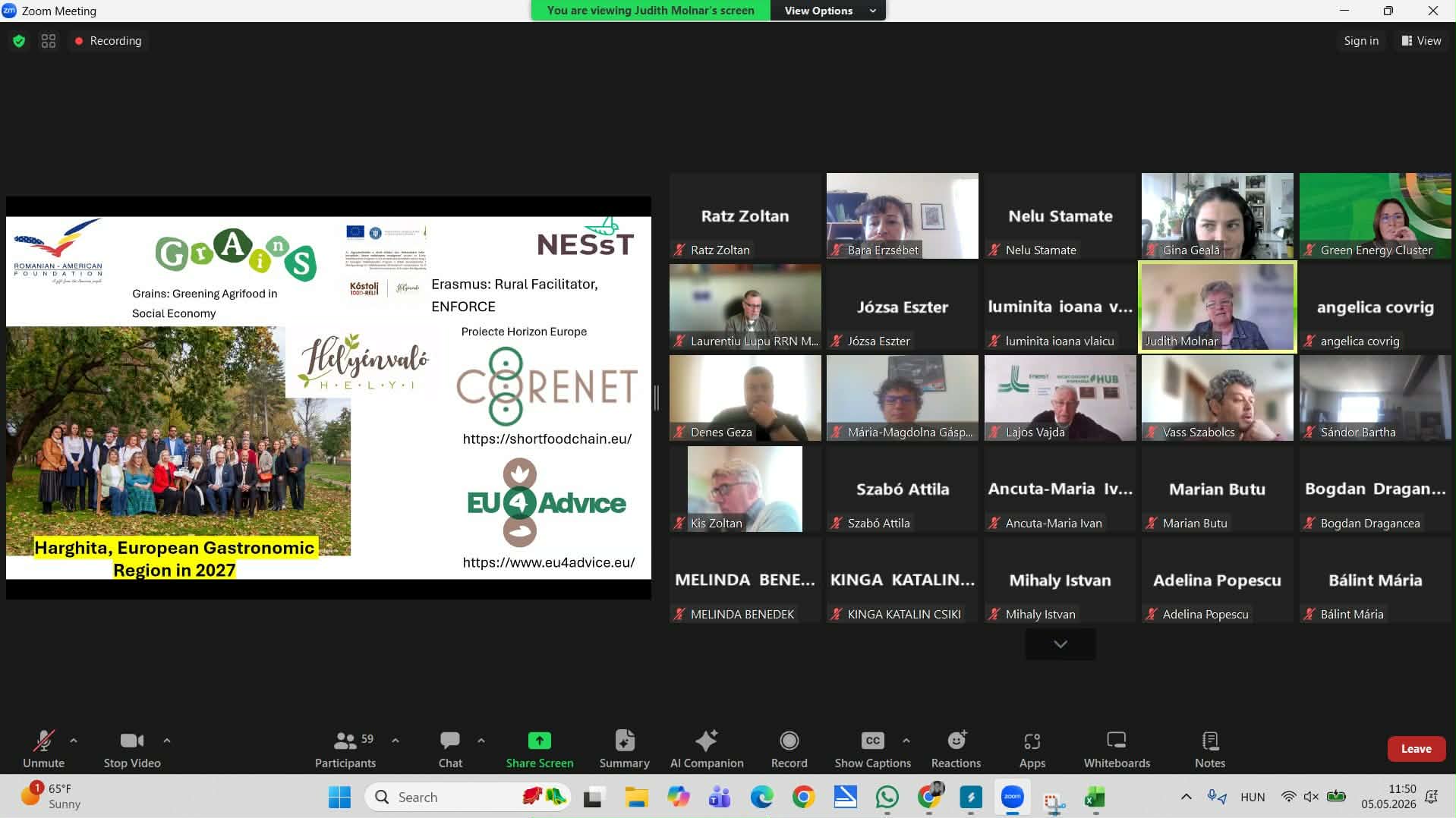
Dr. Judith Molnár of the Spektrum Education Centre recently attended the thERBN Training & Demonstration Days in Harghita and Covasna Counties, Romania. This is an event that perfectly aligned with the goals of the EU4Advice project. She used the occasion to present Civitas Foundation’s work, share insights from recent professional workshops, and invite participants to join the Short Food Supply Chain (SFSC) advisory network.
About the thERBN project
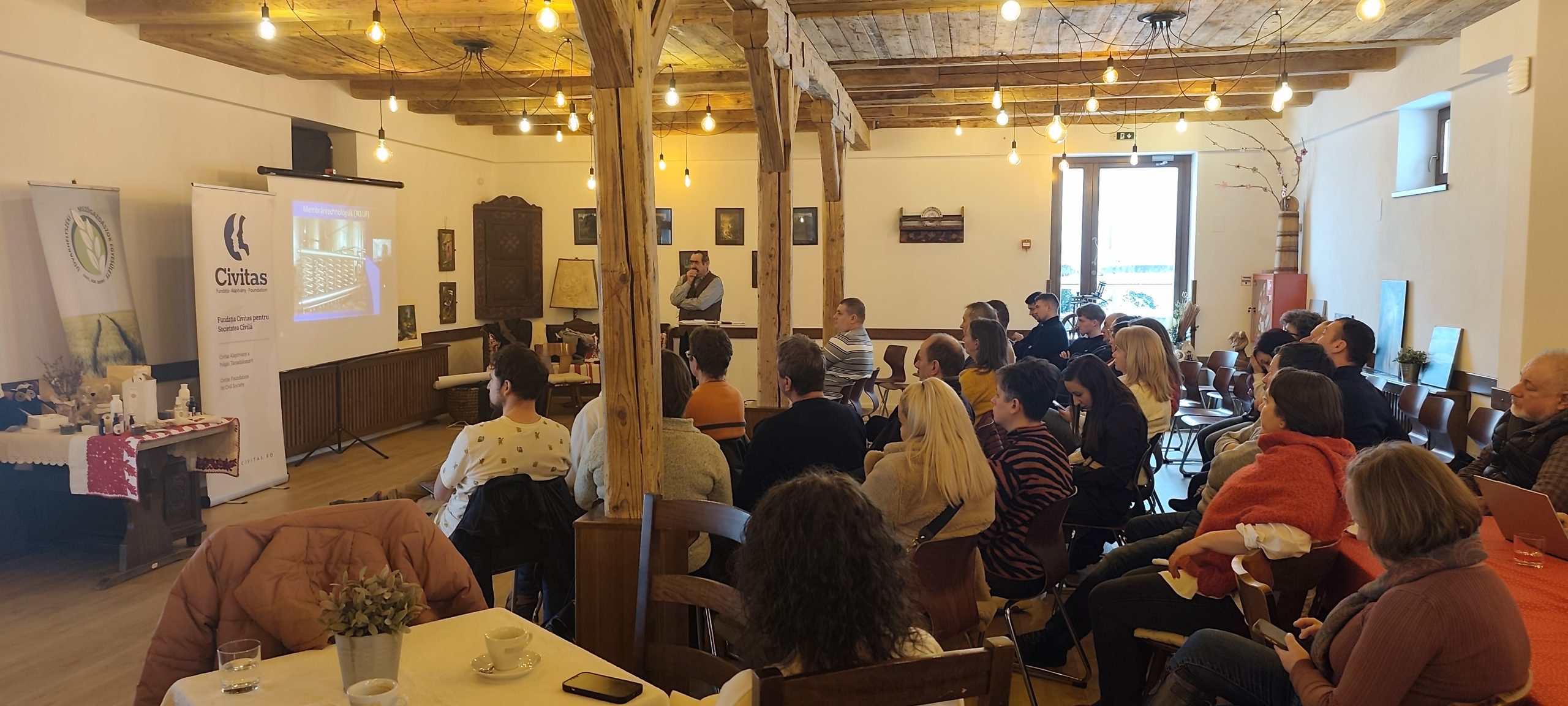
The Thematic European Rural Bioeconomy Network (thERBN) promotes innovative and practical solutions for the sustainable management of agricultural residues and by-products within a circular bioeconomy framework. The Training & Demonstration (T&D) Days brought together a wide range of stakeholders (farmers, processors, researchers, advisors, public authorities, and NGOs) to explore how agricultural and plant-based residues can be transformed from waste into valuable resources.
The event covered practical applications including the valorisation of fruit processing by-products, composting, biomass production, biochar technologies, and circular farming solutions. Through field visits, expert presentations, demonstrations, and facilitated workshops, participants explored innovative technologies, regulatory requirements, business opportunities, and successful local examples.
A key message emerging from the T&D Days was that agricultural by-products should no longer be viewed as waste, but as resources capable of generating additional income, reducing environmental impacts, and strengthening rural resilience. Participants highlighted the need for greater knowledge transfer, cooperation among local actors, accessible technologies, and supportive policies to accelerate the adoption of circular bioeconomy practices.
Representing EU4Advice and Civitas Foundation
Dr. Judith Molnár took the opportunity to introduce the activities of the Civitas Foundation to the Romanian audience (including its participation in the COREnet and EU4Advice projects). She shared insights from two professional workshops recently organised by Civitas and extended an invitation for participants to join the SFSC advisory network, connecting advisors working with short food supply chains across Europe.