EU4Advice Presented at the 8th International ISEKI-Food Conference
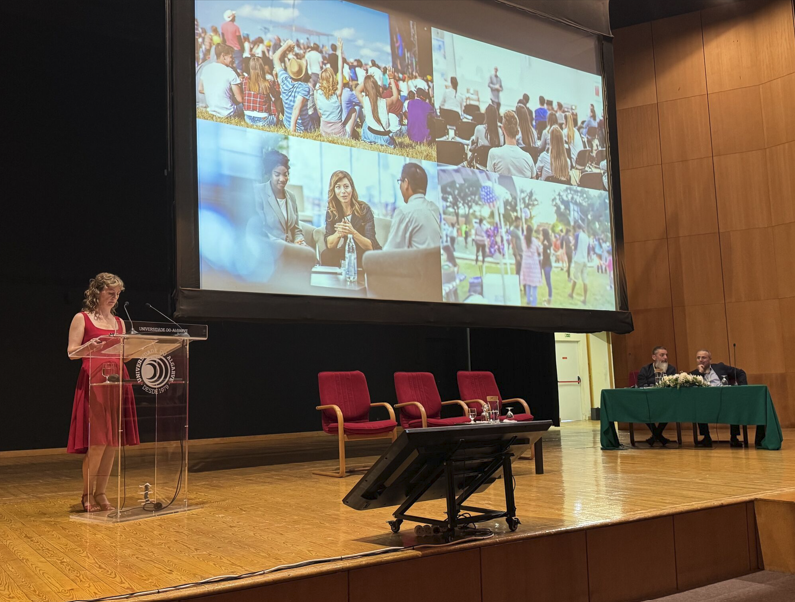
From 1 to 3 June the 8th International ISEKI-Food Conference took place in Faro, Portugal, under the theme “Innovation in Research and Education for the Transition to Sustainable Food Systems”. The conference brought together Food scientists, educators, industry professionals and students from universities and organisations around the world to exchange ideas, share experiences, establish collaborations and foster new research and business partnerships.
EU4Advice was represented by ISEKI-Food Association (IFA) in the session “Education and Training for Sustainable and Innovative Food Systems” through both a poster presentation and a joint oral communication with its sister project COREnet represented by In-Loco.
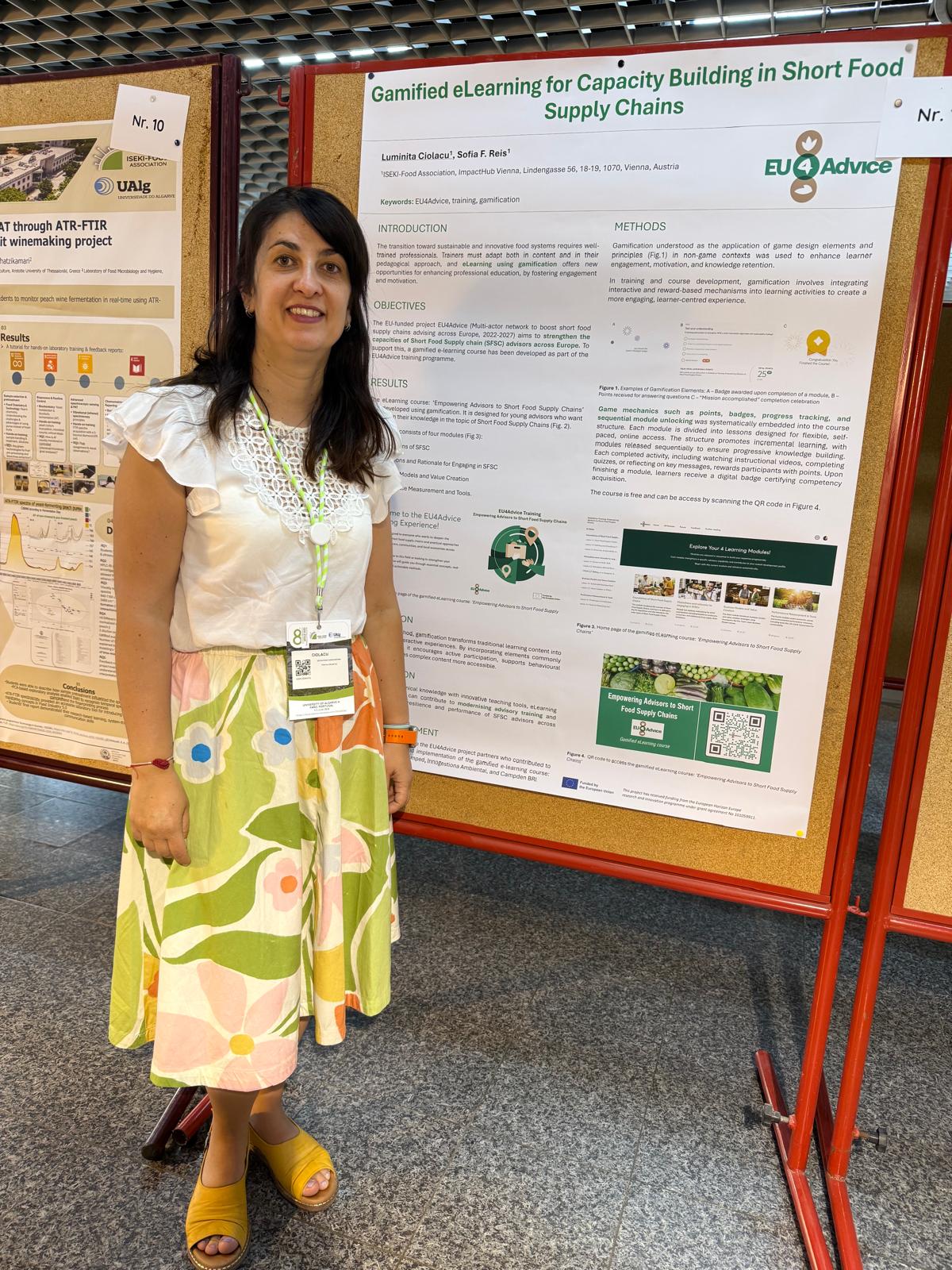
The poster, entitled “Gamified eLearning for Capacity Building in Short Food Supply Chains” was presented by the project manager Luminita Ciolacu. The presentation introduced the gamified eLearning course developed within the EU4Addvice training programme, highlighting its potential to strengthen professional education by increasing learner engagement and motivation.
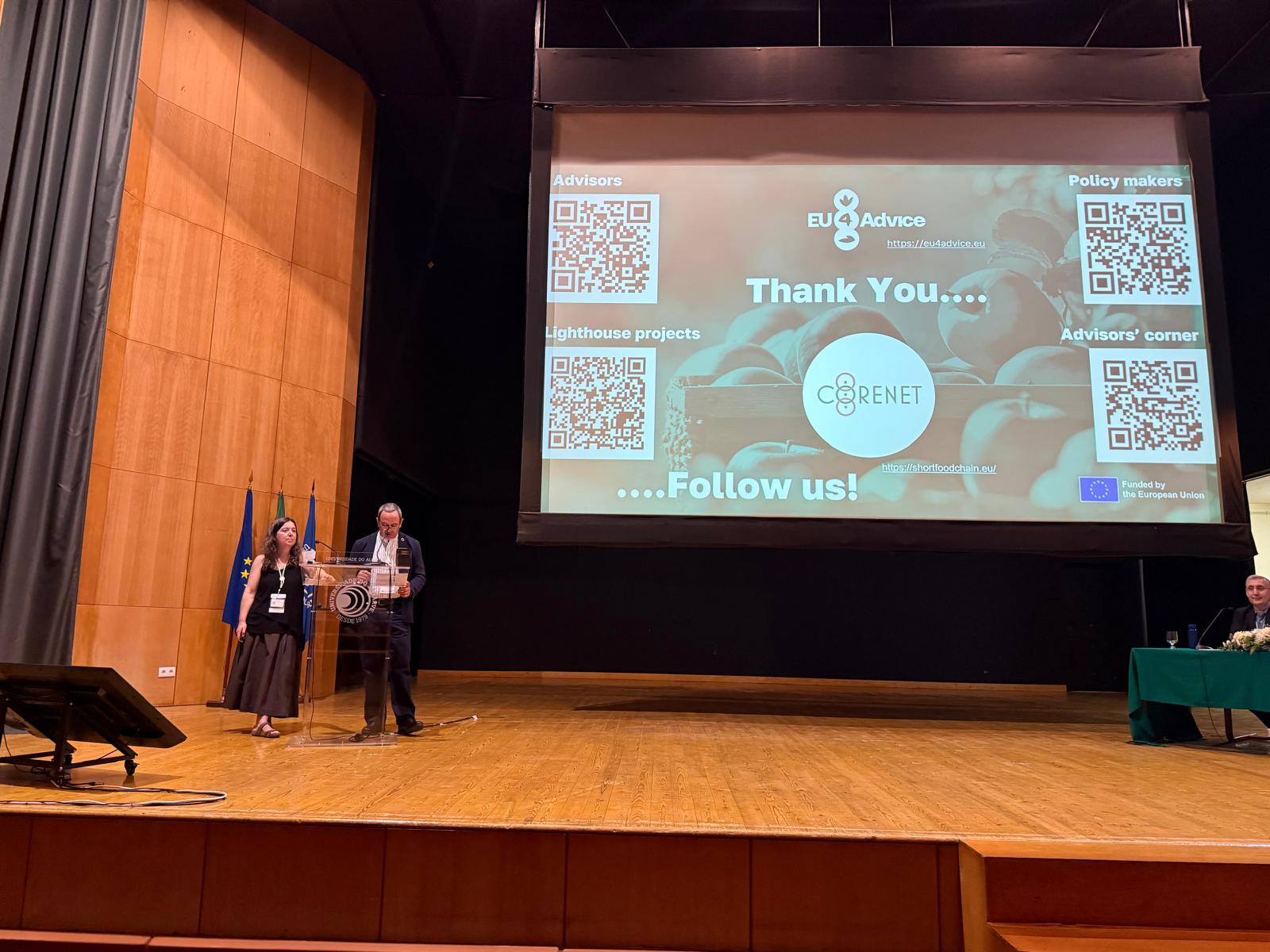
The joint oral communication, “COREnet & EU4Advice: Strengthening EU Advisory Networks to Support Sustainable Short Food Supply Chains” was delivered by the project managers Sofia Reis (EU4Advice) and Artur Gregório (COREnet). The speakers introduced the concept of Short Food Supply Chains (SFSCs) and its importance to the transition to sustainable food systems and explained how both projects are building its common network of SFSC advisors.
The communication then focused on the importance of providing knowledge and skills to the advisors in SFSCs and the efforts done by both projects to develop a comprehensive training programme, highlighting the cross-thematic learning that requires a variety of pedagogical approaches. These include practical learning experiences such as EU roadshows and field visits, structured dialogue through workshops and webinars, co-creation in Living Labs, knowledge codification through “Golden cases”, formal training through microcredentials, and institutional integration via “Lighthouse projects”.
The communication concluded with the message that a multi-actor and multi-format learning ecosystem
can bridge the gap between scientific knowledge, policy ambition, and everyday professional practice, reflecting our believe in this approach, leaving participants with the key message:
“You cannot transform food systems without transforming the learning ecosystems that serve them”.