Cities Leading Food Production: Practical Insights for Short Food Supply Chain Advisors and Policymakers
An article by Common Source
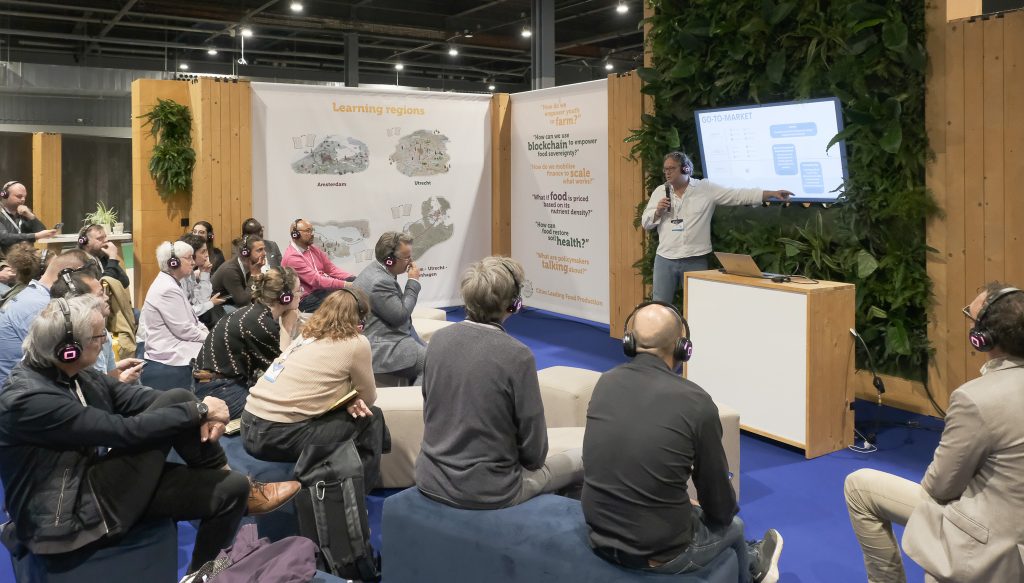
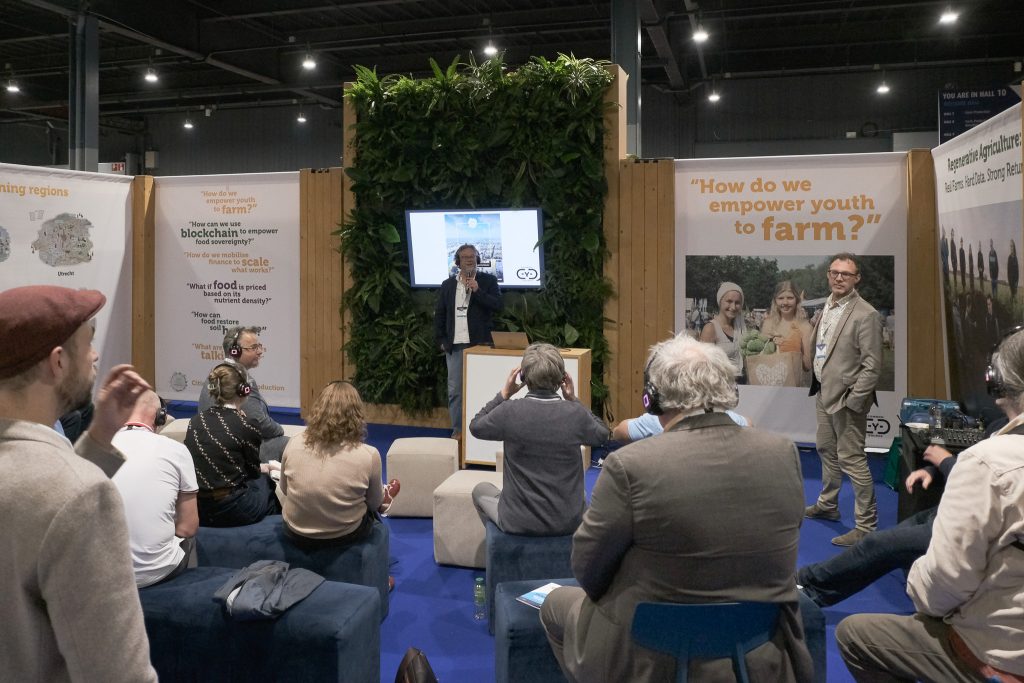
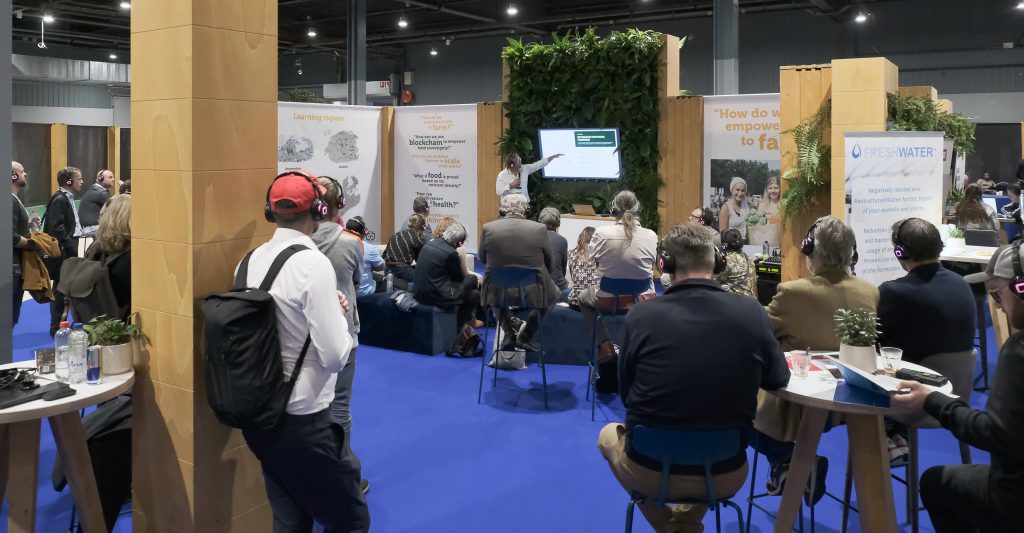
The Cities Leading Food Production-programme, held during VIV Europe 2026 in Utrecht from June 2-4, brought together farmers, advisors, researchers, city and ministry representatives, and innovators for three days of focused workshops and roundtables. Organised in the context of the Horizon Europe EU4Advice project, the sessions delivered grounded, actionable perspectives on building resilient regional and local food networks — directly supporting the work of short food supply chain (SFSC) advisors and policymakers.
A consistent message emerged: transformation succeeds when grassroots innovation meets enabling structures, data-driven tools, and multi-actor collaboration.
Key Insights from the Programme:
Youth-Driven Regional Systems
Maarten Klop (Grounded) demonstrated Utrecht’s model of mapping over 100 initiatives and using matchmaking to unlock 80% of solutions from existing grassroots capacity. Outcomes included student-run kitchens, scaling CSA gardens, and ecological summer camps. Advisors can facilitate similar mapping and living lab processes to engage youth effectively.
Precision Farming at Scale
Jacob van den Borne showcased how drones, sensors, and his “Ground Control” platform enable a small team to manage thousands of hectares efficiently. Real-time data on soil moisture, plant health, and irrigation has improved yields, reduced inputs, and supported soil health — offering advisors practical examples of technology that enhances farm resilience and data-driven decision making. The farm runs the VDBORNE Campus — a real learning centre with field days, workshops, and a free e-learning platform that walks people through their 16-step precision farming approach. Jacob’s operation shows that large-scale farming and precision technology can go hand in hand with care for soil and sustainability. VDBORNE is part of the National Platform Agricultural Experimentation Locations.
Regenerative Agriculture as a Pragmatic Strategy
Lucas Chauvin (EARA) presented a flexible, outcome-based approach with strong business cases: 50% fuel reduction on Swiss farms, 25% improved soil water retention, and over 60% better supply chain resilience. EARA’s focus on benchmarking, advisor training, policy alignment (EU/UK/Green Deal), and de-risking tools (finance/insurance) offers practical pathways for transition support.
Agroforestry for resilience
Evert Prins of the Louis Bolk Institute (and researcher for the National Platform Agricultural Experimentation Locations) and Bhim Bahadur Ghaley of the University of Copenhagen highlighted agroforestry as a key strategy for resilient short food supply chains. Prins shared European examples of tree-crop-livestock systems that improve soil health, biodiversity, and farm income while producing additional outputs like fruits and timber. Ghaley presented research showing enhanced productivity, nutrient cycling, and climate adaptation through diversified systems. Both emphasised context-specific design, knowledge transfer, and policy support to help advisors scale agroforestry effectively across Europe. Their sessions offered practical insights for integrating these approaches into advisory work and regional food strategies.
Circular Landscape Restoration
Marcel van Silfhout (Graangeluk) shared the revival of ancient grains, innovative cattle grazing, and local value chains for bread and beer. Expansion from 43 to 120 hectares and integration of two bakeries illustrate viable circular models that restore soil, biodiversity, and farm profitability.
Advanced Tools for Vitality and Transparency
Independent researcher Henk Kieft (Vital Food Community) showed quantum biology principles (coherence, frequencies, consciousness) and tools such as Aqua 4D and biophotonics. John D. Liu and Ties van der Hoeven of The Weather Makers presented low-tech Eco-Oasis and Katabatic solutions for microclimate restoration.
Asgeir Oskarsson and Alexander Mann from the BSV Association led a clear and forward-looking workshop on how blockchain can help fix some of the biggest problems in today’s food systems. Asgeir brings deep expertise in blockchain infrastructure and its real-world applications, while Alexander shared concrete examples from the vineyard sector. Together they showed how blockchain is much more than cryptocurrency — it’s practical infrastructure that can bring transparency, fairness, and efficiency to food production and distribution.
Global and Systemic Perspectives
Contributions from Africa (PASGR), the Middle East (Goumbook), and foodscape mapping (SUSMETRO) underscored participatory co-creation, local adaptation, and data-informed regional planning for resilient and regenerative food systems.
The AKIS Perspective
Jeroen Nagel (Dutch Ministry of Agriculture / national AKIS coordinator) provided a strong policy and innovation framework. The Dutch AKIS is shifting from linear knowledge transfer to multi-actor collaboration through over 200 projects and expanding Field Labs (living labs). This aligns closely with EU-level AKIS development, emphasising demand-driven, farmer-oriented innovation and stronger links between practice, research, and policy.
Value for EU4Advice and the Advisor Community
One of the core tasks of EU4Advice is to integrate Short Food Supply Chain knowledge and practices into Agricultural Knowledge and Innovation Systems (AKIS) across Europe. The Cities Leading Food Production programme delivered exactly this kind of actionable intelligence.
For SFSC advisors, the sessions offered concrete methods to support clients: stakeholder matchmaking, living lab facilitation, regenerative benchmarking, precision farming tools, digital transparency solutions, and de-risking strategies. For policymakers and AKIS coordinators, Jeroen Nagel’s insights reinforced the need for multi-actor platforms, advisor training, and policy frameworks that reward outcomes and reduce transition barriers.
By connecting grassroots innovation with structured knowledge systems like AKIS, the programme demonstrated how advisors can play a pivotal role in scaling resilient, regional food networks. EU4Advice will continue translating these insights into practical tools, training modules, and policy recommendations to strengthen SFSC advisory services throughout Europe.
The Cities Leading Food Production sessions confirmed that collaboration between practitioners, advisors, and policymakers is the most effective way to build future-proof food systems. We invite all advisors and AKIS actors to engage with EU4Advice and contribute to this shared mission.
Let’s turn knowledge into coordinated action across Europe and build bridges beyond