Four Voices on why local food needs people who care
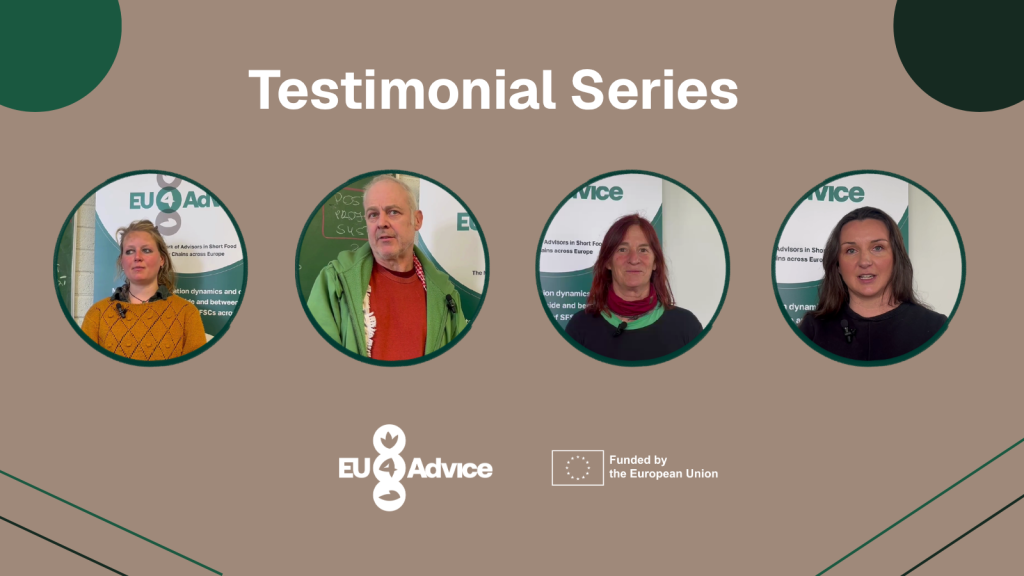
There are individuals out of the public eye who are working hard to sustain the system that connects and protects behind every local loaf, every box of vegetables, every honest label. As part of our Testimonial Series, we spoke to a few of those involved in looking after different elements of the short food supply chain: Alice (farmer), Joe (Real Bread Ireland network of independent bakers), Sarah (soil health researcher) and Caitriona Scully (Midwest Bio District). Four roles to play: caring for the land and the people who grow on it.
Alice: Making People Feel at Home On the Land
Alice has noticed something that most people don’t see. There are people in their 20s and 30s who want to know where their food is coming from, and who are willing to do the work differently than they were brought up. But it’s not just the young; the forties, fifties and sixties are all joining the fray, seeking something smaller and more tangible.
Meanwhile, farms are facing problems. Decades of toil by large-scale growers to create and care for their land are being undermined by their own children’s decisions not to do the same.
What Alice is always finding herself returning to is easy: the people who want in, and the farms who require assistance, need just the same thing. They only don’t know how to locate each other. She feels that there’s no need to convince people to care about local food, as they already do.
Watch the interview here!
Joe: Connecting Bakers to their Community is the goal
He experiences every day through Real Bread Ireland’s network of independent bakers what it takes to keep flour, grain and community together. Good bread is more than a good recipe, it requires support, the sharing of knowledge and someone willing to help bakers through the systems which surround them so that they can continue to feed the people nearby.
For him, it is important to make villages resilient and independent to make their own bread, and he has worked to create this bakers’ network around Ireland.
Watch the interview here!
The Honest Heart is the way to Protect People in Sarah
With SoilGuard, an EU Horizon project on soil health, Sarah observes the extent to which trust is placed on such a simple label as honesty. More transparency and honesty in the food system, she says. Every person making dinner decisions deserves the truth.
She has examples aplenty: Beef can be “Irish” even if the animal was raised elsewhere. That disconnect between what a label says and what is actually true can be a silent betrayal to a person who wants to buy from a local farmer. It is the same with pesticides and chemicals; families are making decisions without the information. Honesty is the backbone of trustworthy food.
Watch the interview here!
Making sure that nobody is left behind in the chain, Caitriona
Caitriona Scully combines all of these elements in her work with the Midwest Bio District Project. There are projects that merely transport things from one location to another. Hers is not one of those.
For her, short food supply chains are a protective measure, not just for the environment, which is already under pressure from long, fossil-fuel-intensive supply chains, but also for the people who rely on the system to remain stable. Shortening the chain isn’t about reducing the value of food, she says; it’s about ensuring that all those who helped produce and deliver it to us are included in the chain and that there are just a few gentle adjustments to the power dynamics that are working in favour of the small producers and leaving others in the chain behind.
She mentions a locally owned food coop, which is a store, a place for mindfulness classes, a place for cooking classes, organic food, and a place where a local farmer can bring their food home to people who will eat it. That’s what’s important to Caitriona. It’s not just logistics to shorten a food chain. It’s bringing back the care, fairness and connection.
Watch the interview here!