
Selling together, deciding together: key takeaways from our Advisinar on collective marketing
When producers decide to sell together, the product is rarely the hardest part. The real challenge is agreeing on how to work together: who decides, how costs, risks and work are shared, and how the group adapts as it grows. These questions were at the heart of our Advisinar “Governance Models for Collective Marketing in Short Food Supply Chains”, held online on 19 October by EU4Advice and COREnet and facilitated by CTCPA.
Almost 170 people registered and 68 joined live to hear from Anne-Cécile Brit (INRAE), Françoise Morizot-Braud (CERD), Flora Pelissier (TRAME) and Jan Willem van der Schans (Taskforce Korte Keten). It was also the first Advisinar with live translated subtitles, and our quick poll at the end showed that participants found them helpful.
Key takeaways for advisors
- Cooperation makes the difference. Research shows that short food supply chains are not sustainable by nature. Their impact depends on how the people involved organise and work together. Groups help farmers share the workload, free up time for family and holidays, lower the barriers for newcomers and stay resilient in a crisis, as many showed during the COVID-19 lockdowns.
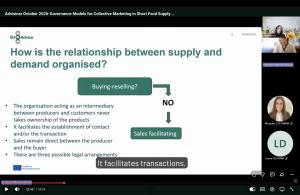
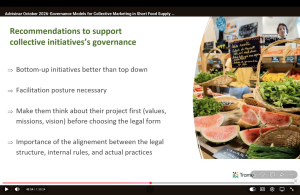
- Project before structure. Groups should first agree on their project, the goals of each member, how work will be organised and what investments are needed. Only then should they choose a legal form. A key decision is whether the collective will buy and resell products, which means it owns them and bears the commercial and health risks, or act as an agent, with each producer remaining responsible for their own products.
- Put money and work on the table early. Collectives that last record each member’s time and costs, compensate fairly, rotate tasks and meet regularly. Their rules are written down and genuinely understood by everyone. Copy-pasting another group’s internal rules may seem like a shortcut, but it often leads to conflicts when written rules and everyday practice don’t match.
- Good governance takes time. La Bardane, a farmer-owned shop in the Luberon run by 60 producers, took two years to go from idea to opening, with support from local partners and producer networks. Today 86% of its value goes straight back to the producers. Research also suggests that the benefits of collective action often take five to seven years to appear, an important message for both funders and advisors.
- Governance evolves. As groups grow, face higher workloads or welcome new members, including non-producers, their rules need to be revisited. Tools like work banks, solidarity funds and shared logistics can ease the pressure, as long as roles and responsibilities stay clear.
- Facilitate, don’t decide. Advisors bring tools, expertise and connections to peers, but the group has to make its own choices. Sometimes the most useful step is to help members define their shared values, mission and vision before anything else.
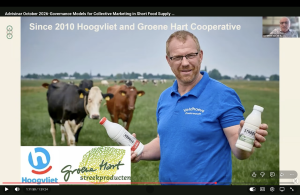
- Existing channels can work too. Short supply chains don’t always need new structures. In the Netherlands, the Green Heart Cooperative sells certified regional products through supermarkets under a label the farmers own and set prices for. Independent shops and open-air markets can also be redesigned step by step.
- Think carefully before going digital. Online tools can save time, but they also shift power to whoever owns the tool and the data. Groups should decide together who controls the platform and the customer information, and what happens if a member leaves.
If you missed the session do not worry! You can rewatch it on our YouTube channel here.
A heartfelt thank you to our speakers, to CTCPA for facilitating the session, and to everyone who joined, asked questions and shared their experiences. Your participation is what makes the Advisinars a real space for learning together. Keep following EU4Advice social media to not miss the upcoming appointments.