
Women in SFSC: Short Chains.Trusted Advice.
A chat with Réka Bognárné Ferenczei | SFSC Advisor | Hungary
From phone calls to farm visits, Réka Bognárné Ferenczei helps producers around Hungary’s western Lake Balaton build connections and find practical solutions. As an SFSC mentor at the West Balaton LEADER Association, she supports nearly 30 producers and open farm operators. From regulations to digital tools and event planning, their challenges are varied. Réka’s approach starts with listening, building trust and knowing who can help.
We interviewed Réka about being a trusted advisor, the introduction that saved a farm event and helping producers find solutions together—reflecting EU4Advice’s emphasis on collaboration.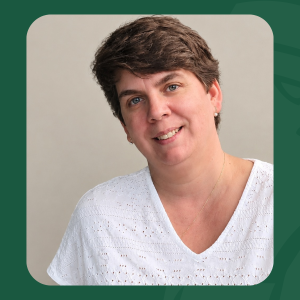
Can you briefly introduce yourself and your role as an advisor?
My name is Réka Bognárné Ferenczei, and I currently work for the West Balaton LEADER Association as a regional SFSC mentor and project manager. Last year, I served as a SFSC mentor at the Tájkapocs Foundation, having completed the SFSC organizer training program in February 2025; I now apply the knowledge and experience I gained there to my work. My day-to-day work primarily involves mentoring the region’s existing and newly established “open farms” (SFSC sites); in addition to supporting these sites, I maintain ongoing contact with local producers and assist them in overcoming any challenges they face. Beyond providing assistance and coordination via telephone, I also frequently visit the producers in person to foster mutual trust and cooperation.
What kind of producers do you mainly work with, and in what capacity?
I currently work in the western Lake Balaton region—specifically within the Keszthely-Hévíz-Türje-Balatonszentgyörgy area—as a Short Food Supply Chain (SFSC) mentor, supporting nearly 30 producers and “open farm” operators. These producers are primarily engaged in livestock farming and fruit and vegetable processing, though an increasing number are venturing into agritourism services (such as operating open farms, organizing workshops and tastings, and running rural accommodation). A regional “Open Farm” network is currently being established in the area, with 15–20 farms joining in the initial phase; I maintain the closest working relationships with these farms, as they have numerous questions regarding services and requirements. Consequently, I am in weekly telephone contact with more than half of the producers and meet most of them in person on a monthly basis. With some producers, I communicate on a daily basis during critical periods.
What is the most common challenge producers bring to you?
Producers come to me with various problems, for example, many of them do not even know each other within the region and they turn to me with questions such as where they can get additional raw materials for the production of their own products or to whom they can sell their own produced products (connecting peanut producer – chocolate manufactory, beekeeper – fruit grower). To this end, we try to organize events in the region, thanks to which our producers and factories can get to know each other and each other’s factories.
There have already been inquiries from several producers regarding regulations (mainly questions related to the household guest table service and packaging).
In the case of newly started open houses, many questions arise regarding how and in what way to plan an open day on your farm, what programs to put together and how to promote it. Some of the producers have a problem with the use of digital tools to be present on social media, and in this regard they also receive several requests (how to create a post or event on the Facebook page, how to upload a video to Tiktok). Logistics and lack of time is a crucial point for all producers, for example, before the national open door day in our region, several people contacted me saying that they needed help with the preparations, and I tried to find a solution for this as well.
Can you recall a moment when your advice made a real difference for a producer?
As I have been working as an SFSC mentor for a relatively short time, I can recall a few instances so far where my assistance led to a major, long-term change in a producer’s life. Nevertheless, there have already been situations where a simple, practical piece of advice or a well-timed connection provided tangible help.
On one occasion, a producer contacted me ahead of an upcoming event; they had been left to handle the preparations alone and had no help organizing or running the program. The situation had become so difficult that they were actually considering cancelling the event altogether. During our conversation, I suggested we look for a local solution and offered to put them in touch with the principal of a nearby agricultural vocational school. We thought that student volunteers from the school might be able to assist with the preparations. As a result of this connection, six students arrived at the farm and provided significant help in getting everything ready.Thanks to this, the producer did not have to cancel the program; preparations were completed on time, and the event was a success.
For me, this was a valuable experience because it demonstrated that mentoring often does not require a complex technical solution; instead, it is about listening to the producer’s problem, recognizing the opportunities within the situation, and connecting them with the right person or organization.
The producer was later very grateful for the assistance, which confirmed to me that one of the most important tasks of a short food supply chain (SFSC) mentor is building local connections and creating opportunities for collaboration. While this story might seem like a minor achievement, for the producer in that situation, it was highly significant: an event that had nearly been abandoned ultimately turned into a successful program.
What kind of advice tends to work best in practice?
In my view, the advice that works best in practice is that which is grounded in the producer’s specific situation, problems, and opportunities, rather than offering merely theoretical guidance. However, this requires the development of genuine trust between the producer and the mentor or consultant. Trust enables the producer to speak openly about their difficulties, obstacles, and even their uncertainties. This is crucial because we can only provide effective assistance if we fully understand the problem and its context. It is also important for the producer to feel that we are not simply dictating what they should do from the outside, but are instead working together to find the solution that suits them best.
In my experience, the simple act of listening to the producer and genuinely trying to understand their situation often makes a significant difference. During conversations, as they describe the problem and we explore the options together, the producer frequently arrives at the realization themselves regarding what needs to change and how. That is why I prioritize collaborative thinking in my consulting work. Beyond concrete, actionable ideas, the greatest help is often simply knowing that they are not alone with their problem—that there is someone to turn to and someone to help them identify the next step.
I believe that a good mentor does not necessarily provide a ready-made answer for every problem. It is far more important to help the producer find their own workable solution through the right questions, connections, and practical ideas.
Which EU4Advice resource has been most useful in your work with producers, and why?
Among the EU4Advice resources, I found Practice Abstract #16—titled “(Urban) Living Labs: A Practical Method to Strengthen Local Food Systems and Short Food Supply Chains”—particularly useful. The material approaches the development of local food systems and short supply chains by fostering collaboration and encouraging local stakeholders to think together. This perspective aligns well with my own work, as my role as a mentor for local food systems often involves connecting producers with one another or with other local stakeholders.
In practice, I can apply this primarily when establishing regional “Open Farm” (Nyitott Porta) networks. I believe it is important for producers not to operate in isolation but rather to get to know each other, share experiences, and collaboratively seek solutions to the challenges that arise. The material reinforced my view that a mentor’s role often lies not in providing ready-made solutions, but in facilitating the right connections and initiating a process of collaborative thinking.
This testimonial is part of “Women in SFSC”, an EU4Advice initiative that gives visibility to women shaping short food supply chains across Europe, while highlighting the role of advice and support in their journeys. Follow EU4Advice on social media to discover more stories!