The “Connecting Farmers, Communities & Markets” experience offers some valuable lessons for advisors
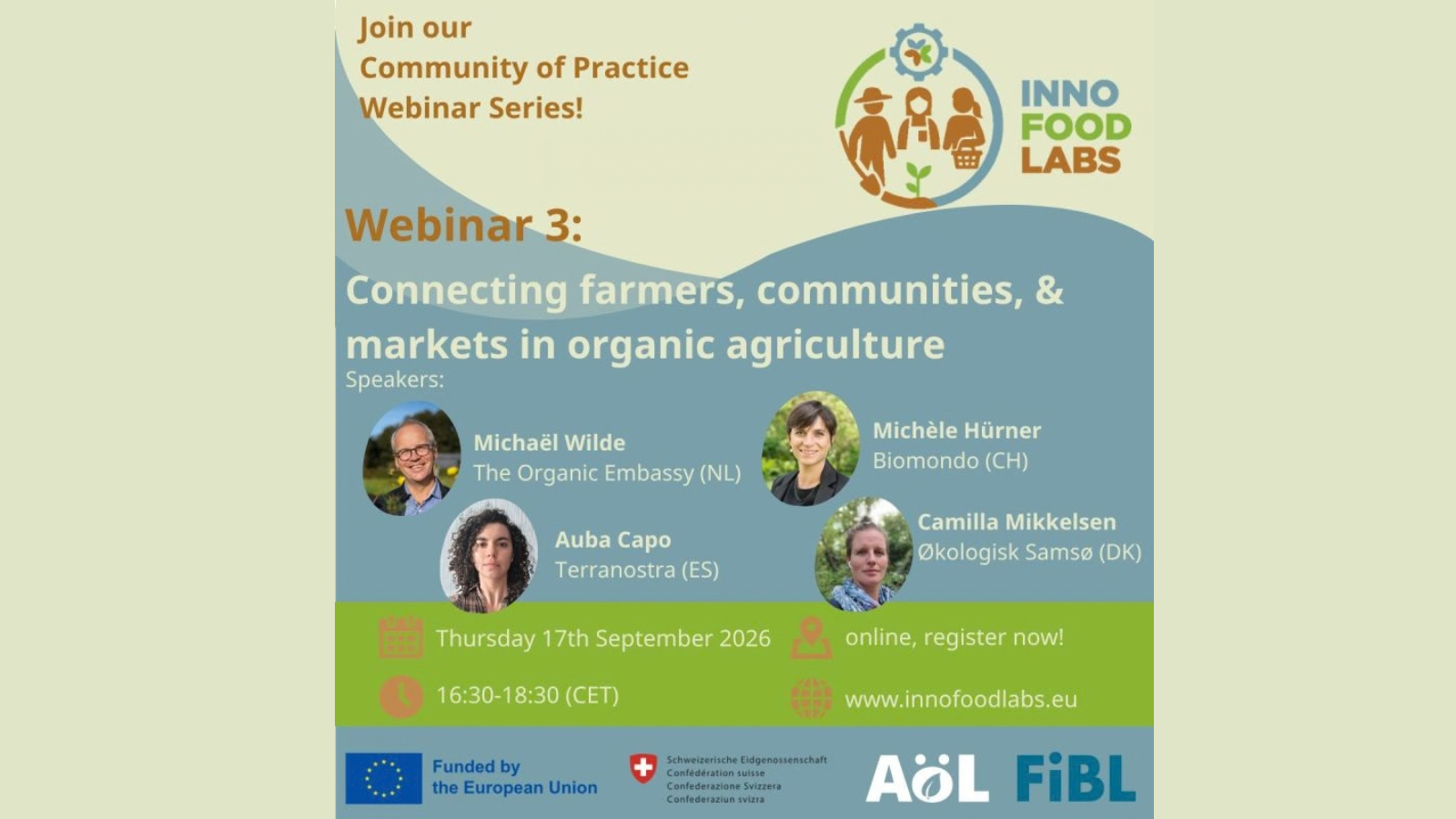
The third InnOFoodLabs webinar, ‘Connecting farmers, communities & markets in organic agriculture’, provided four totally different lessons and was a valuable learning opportunity from an advisor’s viewpoint. It took place online on 17 September.
Opening the session, Michaël Wilde said linking farmers, communities, and markets can only succeed if it is grounded in a tangible aspect of a community’s engagement with the territory: climate ambition, tourism, public health, land access. Each Dutch province had to present the same organic proposal, but with a different “storyline,” always aligned with a local priority and never with another one within the province.
For advisors, this will be a first-hand look at your approach. For instance, a dairy farmer who is thinking about conversion may not share the same concerns as a young dairy farmer starting a CSA (Community Supported Agriculture), nor would he necessarily share the same concerns as a dairy member who decides to expand direct sales. The “advice that lands” is about what that farm, that community is already attempting to solve, and it is not about a generic short supply chain or organic farming.
Linking farmers to buyers through a digital marketplace (as Biomondo in Switzerland does, for example); helpful for the farmer having products but no visibility, but as long as the tool is up, farmers’ willingness, and as long as the platform is not too complex or has too many product descriptions, which both the farmer and the platform’s team agree are stumbling blocks. The advice for advisors: if a farmer does not want to use the digital tool, what’s the value of having it?
Terranostra (Mallorca) participates with farmers, establishing links, visiting farms, organising tastings and anniversary parties and recruiting volunteers who become advocates.
It is slower and more human, not scalable, and it will be the immediate model for farmers who need to feel seen and included in a new supply chain, or they won’t.
The third path is fully implemented at Økologisk Samsø (Denmark): co-ownership. Small farmers who cannot afford land outright become tenants on community-financed land; they can put their funds and energy into agriculture instead of paying off debts to the local bank. This is the solution for the farmer, for whom the real problem isn’t awareness and trust; it’s access.
All these approaches are not “the” answer. What they have in common is a starting point: once you know what the real challenge is for the farmer –visibility, trust, access– you can pick the appropriate engagement mechanism.
In each of the three examples, a theme is clear and directly tells a story about what SFSC advisors do. Terranostra’s own response to others who had comparable projects is to remain focused on the “human aspect”, making sure that everyone has a meaningful role. The other message from Biomondo was to work within existing networks and not start from scratch; and the message from Økologisk Samsø was that markets should be created in parallel with the farms, in order to support farmers during their start-up phase and not assume they are immediately market-ready.